


- Introduction: Breaking Down at the Same Spot, No Matter How Many Times You Run
- 1. Why Is the Marathon So Incredibly Difficult?
- 2. Is the “Gas Tank Theory” Wrong?—The Achievements and Limits of Traditional Models
- 3. There Is No Physiological Magic at 30 Kilometers
- 4. The Real Cause of the Wall Is Built in the First Half (The Pacing Trap)
- 5. What Is Durability? The Ability to Resist Performance Decay
- 6. Fast Runners vs. Runners Who Stay Fast (Capacity vs. Durability)
- 7. Why Do We Collapse at 30–35 km? Multi-System Stressors and Interaction
- 8. “My Lungs Feel Fine, But My Legs Are Dead”——Neuromuscular and Biomechanical Decay
- 9. Why Do We Still Slow Down When Fueling? The Reality of Gut Function (EIGS)
- 10. Race-Day Strategies: Defending Your Durability
- 11. Liberation from the Curse of “Lack of Willpower”
- 12. How Do We Train Durability?
- 13. The Master Athlete’s Reality: A Dialogue with Recovery Resources
- 14. Balancing “Training for Fatigue” with “Managing Recovery”
- 15. Separating “Raising Capacity” from “Preserving Capacity”
- 16. Durability as a Universal Language: Applications Across Endurance Sports
- 17. The Intersection with My Own Training Philosophy
- 18. Conclusion: You Can’t Erase the Wall—You Can Only Shift It
- References
Introduction: Breaking Down at the Same Spot, No Matter How Many Times You Run
If you have ever run a marathon, you have likely experienced that indescribable, grueling sensation.
From the start until roughly the halfway mark, your breathing remains calm and steady, and your feet move lightly at your planned pace. “I feel great today,” “I might actually crush my personal best.” You cover the miles with an almost effortless rhythm.
Yet, somewhere past the 30 km mark, the scenery shifts abruptly.
The energy drains completely from your core. Your legs, which once turned over with smooth rhythm, suddenly feel heavy as lead, and your stride noticeably shortens. Though your lungs still feel somewhat manageable, your legs stubbornly refuse to obey. You glance at your watch only to see your pace slipping away. Desperate to hold on, you try to force the effort—only to trigger the ominous warning signs of cramps in your calves and thighs.
“Ah, I’ve done it again. I’ve hit the wall…”
From 30 to 35 km and beyond, many runners are forced into a severe collapse.
Often referred to in running culture as the “30 km wall,” this phenomenon is studied in sports science and exercise physiology as Hitting the Wall (HTW). HTW describes the point in the latter half of a marathon where a runner can no longer maintain their target speed, experiencing a sharp drop in pace and an overwhelming sense of fatigue.
HTW does not strictly strike everyone at exactly 30 km; the timing and severity of the slowdown vary greatly among individuals. Crucially, HTW cannot be explained simply as “running out of glycogen.” Modern science views it as the result of a complex, interacting cascade of stressors: metabolic fatigue, thermoregulatory strain, dehydration, gastrointestinal distress, neuromuscular exhaustion, biomechanical degradation, pacing errors, and perceptual strain.
In other words, HTW is not a sudden cliff that appears at the 30 km mark. It is a state where multiple physiological systems gradually degrade over hours of exertion until performance can no longer be sustained.
As someone who has trained long and hard while repeatedly asking, “Why do my legs quit on me at the end?” I wanted to reexamine the true nature of the marathon wall through the lens of recent sports science. More importantly, I want to explore how master runners in their 50s should rethink their training.
1. Why Is the Marathon So Incredibly Difficult?
If it is a 5-kilometer race, you simply run fast. If it is 10 kilometers, you grit your teeth and endure the suffering. If it is a half marathon, a well-developed lactate threshold and aerobic base will usually get you across the finish line without a catastrophic meltdown.
A full marathon, however, is an entirely different beast.
The marathon is so punishingly difficult because “having high physical capacity” and “sustaining that capacity over 42.195 kilometers” are two entirely separate problems.
Furthermore, a marathon does not test just one system of the body. It is not just about the lungs. It is not just about the muscles. It is not just about glycogen. It is not just heat, dehydration, biomechanics, or mindset.It is all of them at once.
And the truly terrifying part is: “Even when these systems are slowly deteriorating, you can still run comfortably during the first half.”
If your pacing is slightly off at 10 km, your body absorbs it. You can still run at 15 km, 20 km, and 25 km. That is precisely why we fool ourselves into thinking, “I feel great today, this pace is easy.”
Yet, that very sensation of “running smoothly” is often building up an invisible deficit beyond the body’s actual capacity. A marathon does not collect its debts on the spot. Whatever you borrow from your body in the first half must be paid back with steep interest in the second.
2. Is the “Gas Tank Theory” Wrong?—The Achievements and Limits of Traditional Models
To be clear, the traditional model—stating that you slow down because you run out of glycogen—is not incorrect.
Pioneering studies dating back to the 1960s proved beyond a doubt that muscle and liver glycogen are primary fuels for endurance exercise. The higher the intensity, the faster carbohydrates are burned, and once they are depleted, the body is forced to slow down.
In modern marathons, carbohydrate loading and race-day intake strategies—such as consuming 60 to 90 grams per hour, or up to 120 grams for elite, highly trained gut systems—make absolute scientific sense.
Yet, a lingering question remains:
“Even with such sophisticated nutrition strategies and widespread race-day fueling, why do so many runners still experience severe late-race collapse?”“Why do runners with identical training and identical fueling plans experience such vast differences in late-race resilience?”
What research suggests is that while glycogen depletion is a critical trigger for the wall, it alone cannot account for the complex collapse seen in the final kilometers.
Glycogen and carbohydrate availability remain vital. But we must look past them to get a much broader picture of what is happening inside the body.
3. There Is No Physiological Magic at 30 Kilometers
Before going further, we must establish an important fact: There is no magical physiological boundary at exactly 30 kilometers.
The wall does not suddenly materialize out of nowhere at the 30 km signpost. Inside the body, a quiet, cumulative process has been unfolding:
- From 10 km, micro-stressors begin to accumulate.
- By 20 km, those minor stresses are steadily piling up.
- At 25 km, the runner may still feel only a mild sense of warmth or light fatigue.
- By 28 km, subtle shifts in running form, posture, or ground-contact time may already be occurring.
- At 29 km, the internal metabolic cost required to maintain the exact same pace has clearly risen.
- And the moment you cross 30 km, the hidden accumulation of degradation finally breaks the surface as a steep, undeniable drop in performance.
This is why calling it the “30 km wall” is slightly misleading. The wall is not located at 30 kilometers.The wall was being built, piece by piece, within your own stride from the very start line.
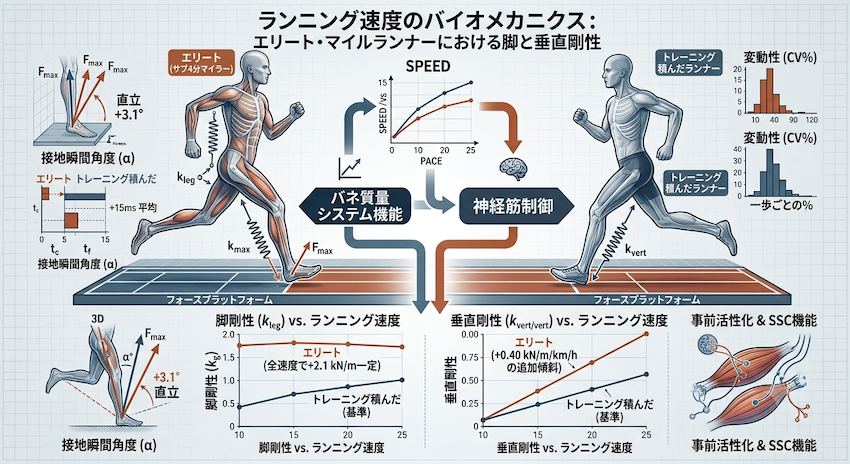
Individual differences, pacing strategy, ambient temperature, hydration, and prior training status dictate when and how sharply this collapse surfaces. Biomechanical research confirms that early-phase indicators—such as shifts in stride length, ground-contact time, and vertical stiffness—can predict late-race deceleration. The wall does not strike out of nowhere; it is built into the earlier miles.
4. The Real Cause of the Wall Is Built in the First Half (The Pacing Trap)
Why, then, does the wall arrive earlier or tower higher for some than others? One of the biggest catalysts is pacing error.
Swept up in race-day adrenaline or the pace of those around them, many runners cross the early splits slightly faster than their true sustainable threshold.
“It’s only a few seconds faster per kilometer, I’ll be fine.”“My legs feel light, this pace feels effortless.”
The seconds banked per kilometer in the early miles are not savings; they are high-interest loans taken out against the second half of the race. Even a slight over-pace early on accelerates the rate of metabolic stress, thermal strain, and neuromuscular damage. That early lapse in discipline returns in the final kilometers as an unavoidable invoice for severe deceleration.
5. What Is Durability? The Ability to Resist Performance Decay
This brings us to a crucial concept emerging in modern exercise physiology: Durability.
As emphasized in recent reviews by Grivas et al. (2026), Durability is not a standalone metric. It is not a single capacity like VO2max or muscular strength; rather, it is an integrative concept capturing how well multiple physiological, neuromuscular, and psychological systems maintain their function under prolonged fatigue.
To define it precisely:
Durability is not the ability to avoid fatigue. It is the capacity to resist the rate of physiological, neuromuscular, and mechanical deterioration during prolonged exercise and maintain performance capability.
In a marathon, the goal is not to “avoid getting tired.” Nobody runs 42.195 kilometers without getting tired. The real question is: When fatigue sets in, how steeply does your capability degrade?
We are all familiar with standard markers of performance:
- VO2max (Maximal Oxygen Uptake)
- LT (Lactate Threshold)
- Running Economy (RE)
These are powerful predictors of endurance performance under rested conditions. But they are all measured when the body is fresh.
How often do we ask: “How well do these capacities hold up after hours of crushing exercise load and accumulated fatigue?”
An athlete with high Durability can run for hours while minimizing the degradation of running economy, blunting the drop in physiological thresholds, and suppressing cardiovascular drift. Conversely, an athlete with low Durability—no matter how high their starting VO2max or LT—will watch their functional foundation crumble under late-race fatigue, making it impossible to hold their target pace.
6. Fast Runners vs. Runners Who Stay Fast (Capacity vs. Durability)
To understand this better, let us separate Capacity (how high your performance ceiling is when fresh) from Durability (how well that capacity is preserved as fatigue, heat, dehydration, and metabolic stress accumulate).
Imagine two runners, Runner A and Runner B, both capable of running 5,000 meters in 20 minutes when fresh. Their initial Capacity is identical.
However, Runner A has consistently logged long, steady miles, building robust fatigue resilience. Runner B has focused primarily on speed work and shorter repeats, neglecting long-duration physiological adaptation.
What happens when these two run a full marathon? In the early miles, they run stride-for-stride at the exact same pace because both possess the necessary Capacity.
As the race progresses into the later stages, the picture changes. Runner A maintains form and metabolic efficiency despite accumulating fatigue (high Durability). Runner B experiences a breakdown in running economy, requiring significantly more oxygen and energy to produce the same speed (low Durability).
Consequently, Runner B suffers a sharp spike in physiological cost. They still possess the initial engine (Capacity), but the physiological cost of maintaining that pace has become unsustainable.
As a conceptual model to capture real-world performance:
$$\text{Marathon Performance} \approx \text{Capacity} \times \text{Durability}$$
(Note: This is not a strict mathematical equation, but a conceptual model framing marathon success through both the height of one’s capacity and the ability to retain it under fatigue. Naturally, actual race performance also depends on pacing, nutrition, heat, course profile, and psychology.)
Measuring peak capacity alone cannot explain real-world racing success. A marathon is less a test of who can run the fastest when fresh, and more a test of who can best resist the decay of their capabilities under severe, compounding fatigue.
7. Why Do We Collapse at 30–35 km? Multi-System Stressors and Interaction
The integrative model outlined by Grivas et al. (2026) views HTW not as a single isolated event, but as the culmination of multiple systems failing simultaneously.
In the critical zones of the late race, several distinct stressors accumulate:
- Metabolic Stress: Glycogen depletion and metabolite accumulation.
- Thermoregulatory Strain: Increased sweat rates and skin blood flow to dissipate heat, leading to reduced plasma volume.
- Dehydration: Loss of body water and electrolytes placing a heavy burden on the cardiovascular system.
- Gastrointestinal Dysfunction: Redistribution of blood flow away from the gut, impairing digestive and absorptive capacity.
- Neuromuscular Fatigue: Impaired excitation-contraction coupling, ionic disturbances, and oxidative stress from thousands of ground-impact cycles.
- Biomechanical Deterioration: Reduced stretch-shortening cycle (SSC) efficiency, loss of tendon elasticity, and altered stride mechanics.
- Pacing Errors: Early over-pacing accelerating all of the above.
- Perceptual Strain: Accumulating internal signals of effort (RPE) reaching the brain and eroding psychological resilience.
Not every runner experiences these in the exact same sequence. The key takeaway is the multi-system interaction model: these stressors do not operate in silos; they feed into one another, compounding the overall physiological toll.
The “30 km wall” is where the cumulative effects of these interacting stressors begin to exceed the runner’s ability to maintain the intended pace.
8. “My Lungs Feel Fine, But My Legs Are Dead”——Neuromuscular and Biomechanical Decay
Every runner knows the frustration of feeling aerobically composed while their legs refuse to cooperate.
Running is not merely an aerobic exercise; it is a repetitive, high-impact mechanical ordeal. Each step generates ground reaction forces that can reach several times body weight, placing repeated mechanical demands on muscles and tendons over tens of thousands of cycles.
As exercise is prolonged, cellular-level changes occur within the muscle tissue:
- Changes in calcium handling and other cellular processes may impair excitation-contraction coupling and reduce force production.
- Oxidative stress and ionic shifts interfere with muscle fiber contraction mechanics.
- Fatigue-related changes in muscle-tendon mechanical properties may impair the effective storage and return of elastic energy, potentially increasing the energetic cost of running.
The result? Maintaining the exact same pace requires recruiting more muscle fibers and expending excess energy. The runner is locked into a vastly less efficient, higher-cost biomechanical pattern than they were at the start. This is the erosion of Running Economy and the gradual loss of Durability.
9. Why Do We Still Slow Down When Fueling? The Reality of Gut Function (EIGS)
“I took gels the entire race, so why did I still crash at the end?”
Nutrition is vital, but fueling alone cannot cure a deficit in Durability.
Prolonged high-intensity exercise restricts blood flow to the visceral organs, potentially impairing gut barrier and absorptive function—a condition known as Exercise-Induced Gastrointestinal Syndrome (EIGS).
Attempting to consume 90 to 120 grams of carbohydrates per hour on race day without prior gut training can lead to severe GI distress, bloating, and nausea. Runners instinctively stop fueling, which accelerates energy deficits. Carbohydrate intake is essential, but it requires a trained digestive system capable of processing and utilizing that fuel under stress.
10. Race-Day Strategies: Defending Your Durability
Scientific reviews point to several race-day strategies designed not as isolated tricks, but as tools to protect Durability:
- Heat Acclimation and Cooling: Mitigates thermoregulatory strain, reduces cardiovascular drift, and blunts the spike in perceived exertion (RPE).
- Fluid and Electrolyte Management: Prevents the compounding strains of severe dehydration or hyponatremia.
- Caffeine: Acts on the central nervous system to enhance alertness and lower perceived exertion.
- Disciplined Pacing: Prevents early over-pacing from throwing all physiological systems into an early crisis.
These are all levers used to manage your limited reserve of durability across 42.195 kilometers.
11. Liberation from the Curse of “Lack of Willpower”
For years, runners who hit the wall have blamed themselves:“I went out too fast.”“I didn’t train hard enough.”“My mental toughness failed.”
While pacing and preparation matter, the true value of sports science is liberating us from simple self-blame. A late-race collapse is not a failure of character; it is a multi-system convergence of metabolic, thermal, circulatory, gastrointestinal, and neuromuscular limits.
Knowing that you did not fail merely out of a “lack of grit,” but because multiple physiological systems reached a tipping point, allows us to shift from emotional self-reproach to intelligent, scientific problem-solving.
12. How Do We Train Durability?
Durability cannot be built overnight. Because it is an integrative capability spanning multiple physiological systems, training it requires a balanced approach:
- High Training Volume and Long Runs: Exposing the body to prolonged mechanical, metabolic, and thermal stress to build tissue resilience and maintain running economy.
- Race-Pace Integration: Embedding marathon-pace blocks within long runs to train metabolic efficiency under fatigue.
- Strength Training: Enhancing muscular strength, stiffness, and neuromuscular integrity to resist late-race biomechanical breakdown.
- Gut Training and Heat Acclimation: Systematically conditioning the digestive and thermoregulatory systems.
However, for master runners—especially those of us in our 50s—this introduces a critical dilemma.
13. The Master Athlete’s Reality: A Dialogue with Recovery Resources
“If Durability is so important, should I just run high weekly mileage, do grueling long runs every weekend, and pile on intense workouts like younger runners?”
Doing so ignores the physiological reality of aging.
For master athletes, the question is no longer just about the training stimulus itself, but how many recovery resources we have left to absorb that stimulus.
Chasing youth-level training loads without adequate recovery leads straight to chronic fatigue, breakdown, and injury. The golden rule for master athletes is absolute:“To build Durability, you must never destroy the body that supports it.”
14. Balancing “Training for Fatigue” with “Managing Recovery”
This requires a fundamental paradigm shift: from a game of maximizing training stimulus to a process of maximizing adaptation.
As we age, the question is not how hard we trained, but how completely we recovered and adapted from that training.
- The Value of Z2 Aerobic Foundations: Consistent, low-intensity aerobic work builds capillary density and mitochondrial function without overtaxing recovery systems.
- Thoughtful Long Runs: Moving away from reckless weekend mileage in favor of disciplined, well-paced efforts that match your current recovery capacity.
- Mindful Strength and Neuromuscular Work: Preserving running economy and speed without inviting chronic fatigue.
For master athletes, improving Durability is an intellectual process of managing stress-recovery budgets to extract maximum adaptation within the boundaries of our personal recovery capacity.
15. Separating “Raising Capacity” from “Preserving Capacity”
Training goals can be split into two distinct categories:
- Capacity-Building Training: Interval training for VO2max, threshold runs, and speed development.
- Durability-Building Training: Maintaining running economy under fatigue, structural tissue resilience, and pacing discipline.
While younger runners can often rely heavily on building raw Capacity, master runners must place equal—if not greater—value on how well they can utilize that Capacity under fatigue.
If your VO2max is high, but that engine falters in the second half of a race, it serves little purpose. A master runner with modest peak capacity who can minimize performance decay will consistently outperform a runner with a higher ceiling whose engine collapses early.
It is not about fighting aging; it is about changing how you fight. That is the true art of master athletics.
16. Durability as a Universal Language: Applications Across Endurance Sports
The concept of Durability extends far beyond the marathon.
Whether you are racing a triathlon—where you must run off the bike after hours of sustained effort—or competing in a 5,000m track race where you must hold your pace when your lungs burn, the battle is the same.
“Fresh strength” and “resilience under fatigue” are two sides of the same coin. Durability is a universal currency across all endurance disciplines.
17. The Intersection with My Own Training Philosophy
Building training day in and day out, I have wrestled with many moving parts: Z2 aerobic base building, CTL (Chronic Training Load) tracking, LT development, VO2max work, running economy, and strength maintenance.
For a long time, I believed that simply running more would make me stronger. But as a master athlete, I learned that raw volume alone does not explain everything.
Discovering the integrative concept of Durability tied these scattered training puzzle pieces into a single, cohesive thread:
- Z2 builds the aerobic foundation.
- LT sets the boundary for sustainable speed.
- VO2max defines the upper limit of Capacity.
- Running Economy governs efficiency at a given speed.
- Strength provides neuromuscular and mechanical margin.
- Long runs and load management (like CTL tracking) stimulate adaptation under fatigue.
We are not playing a game of maximizing sheer stress; we are engaged in a process of maximizing adaptation. Listening to your body, managing your finite resources, and steadily building sustained resilience—that is the path we have arrived at as mature athletes.
18. Conclusion: You Can’t Erase the Wall—You Can Only Shift It
Next time you toe the start line of a marathon, and the legs begin to feel heavy past the 30 km mark, pause for a moment. Look beyond the stopwatch and visualize the complex machinery working inside your body:
Glycogen. Core temperature. Circulatory dynamics. The gastrointestinal tract. The neuromuscular system. Muscles and tendons. And the months of training you built underneath it all.
They are all operating simultaneously across 42.195 kilometers. The “30 km wall” is not a sudden physical barricade waiting for you on the course. It is the cumulative sum of fatigue quietly stacking up from the starting gun.
You cannot build a marathon body that never gets tired. Everyone is exhausted by the finish. The real objective is how well you hold your capabilities once fatigue sets in.
Therefore, Durability is not about erasing fatigue. It is the capacity to resist the collapse of your performance as fatigue progresses.
The wall does not disappear. But instead of crashing hard at 30 km:(For illustration only, imagine two hypothetical patterns of performance decline:)
- Before: Your performance drops steeply at 30 km (90%), 35 km (78%), and 40 km (60%).
- With Durability: The rate of deterioration flattens out—30 km (94%), 35 km (88%), and 40 km (80%).
The wall remains, but its slope is softened, and the point where it surfaces is pushed further and further back down the road.
It is not just about raising your ceiling; it is about protecting that ceiling when the storm hits. For master athletes managing precious recovery resources, the priority shifts from chasing raw stimulus to engineering intelligent adaptation.
So, ask yourself in your daily training: Are you only obsessed with raising your peak numbers? Or are you building a body that can defend those numbers when it matters most?
The keyword is Durability.
Now, let’s keep enjoying the ongoing process of learning to understand our bodies, steadily stacking up our endurance, one intelligent step at a time.
References
1. Grivas, G. V., Alkasasbeh, W. J., & Amawi, A. T. (2026). “Hitting the Wall in Marathon Running: An Integrative Psychophysiological and Durability-Based Review.” Journal of Functional Morphology and Kinesiology, 11(3), 291. PMID: 42647332
2. Maunder, E., Seiler, S., Mildenhall, M. J., Kilding, A. E., & Plews, D. J. (2021). “The Importance of ‘Durability’ in the Physiological Profiling of Endurance Athletes.” Sports Medicine, 51(8), 1619–1628. PMID: 33886100
3. Joyner, M. J., & Coyle, E. F. (2008). “Endurance Exercise Performance: The Physiology of Champions.” The Journal of Physiology, 586(1), 35–44. PMID: 17901124
4. Viribay, A., Arribalzaga, S., Mielgo-Ayuso, J., Castañeda-Babarro, A., Seco-Calvo, J., & Urdampilleta, A. (2020). “Effects of 120 g/h of Carbohydrates Intake during a Mountain Marathon on Exercise-Induced Muscle Damage in Elite Runners.” Nutrients, 12(5), 1367. PMID: 32403259
5. Costa, R. J. S., Snipe, R. M. J., Kitic, C. M., & Gibson, P. R. (2020). “Exertional-Heat Stress-Associated Gastrointestinal Perturbations during Olympic Sports: Management Strategies for Athletes Preparing and Competing in the 2020 Tokyo Olympic Games.” Temperature, 7(1), 58–88. PMID: 32166105

コメント