
What does it really take to become faster? This category explores the physiological and mechanical factors that determine performance in the 5K, marathon, triathlon, and other endurance events, including speed, endurance, running economy, and durability.
 Performance
Why Do Runners Suddenly Hit the Wall at 30 km? — The Truth Behind “Hitting the Wall” (HTW) and the Science of Durability
Introduction: Breaking Down at the Same Spot, No Matter How Many Times You RunIf you have ever run a marathon, you have ...
 Performance
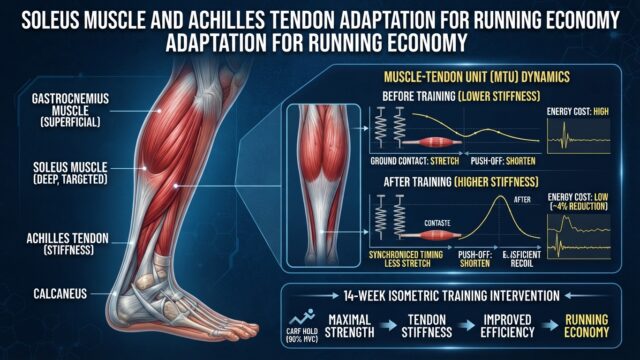
Why I Rethought Lower Leg Training: The Belief That Thinner Calves Mean Faster Times
I used to be quite reluctant to actively train my calves for running. In fact, I believed that "thinner calves are bette...
 Performance
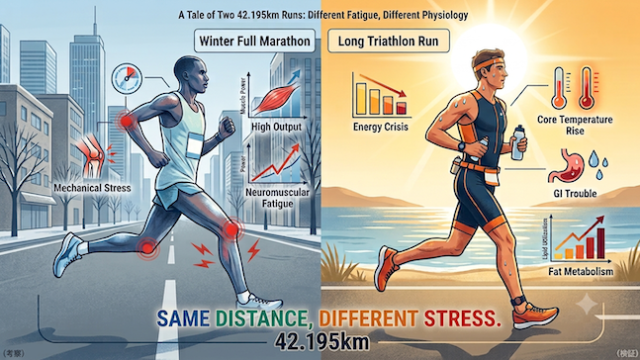
Winter Marathons vs. Long-Distance Triathlon Runs: Are They Really Different? A Scientific Look at Fatigue and Training
A standalone winter full marathon and the run leg of a long-distance triathlon both cover the exact same distance: 42.19...
 Performance
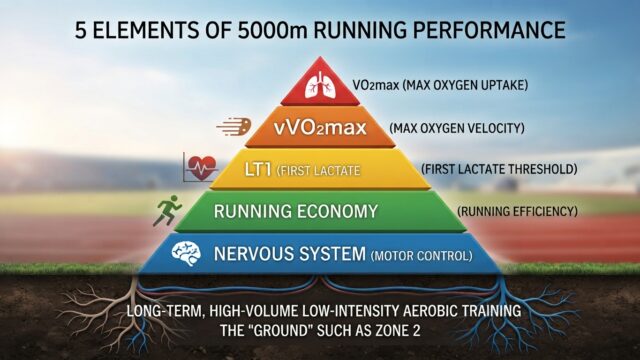
Breaking 20 Minutes in the 5K Takes More Than VO2max: 5 Key Elements to Develop
📌 Key Takeaways (Read this if you are short on time!)When aiming to break 20 minutes in the 5K (a pace of 4:00/km or 6:2...
 Performance
The “1+4 Jog” Method: A Simple Way to Build Speed Without Sacrificing Aerobic Fitness
Except on days dedicated to building aerobic endurance with long runs, I rarely rely on conventional steady-pace jogs fo...