
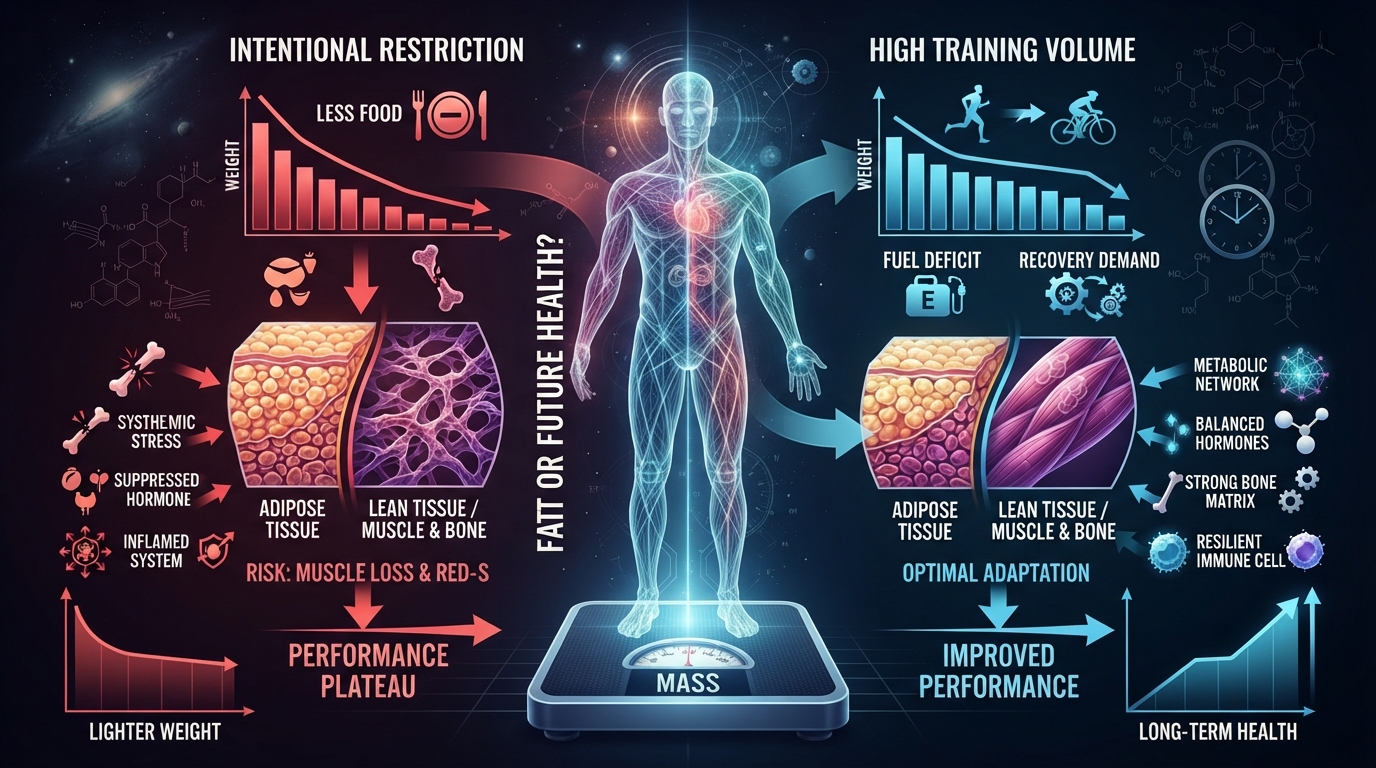
Every morning, or the moment you step onto the scale after a grueling training session, many of us react emotionally to every change in that number. If the number drops by one kilogram compared to yesterday, we pat ourselves on the back, convinced our diet is progressing smoothly. Conversely, if it goes up, anxiety sets in, worrying that last night’s dinner had too many carbohydrates.
Alternatively, after extending your weekly running distance and ramping up your cycling volume, you might notice the weight slipping off effortlessly, leaving you feeling lighter and performing well with a sense of satisfaction. Anyone engaged in endurance sports has experienced this cycle countless times.
Yet, how accurately do we understand the true nature of that lost weight? The bathroom scale we rely on daily is not a precision fat analyzer. The number displayed is simply the total mass of everything in the body—tissues, fluids, and other substances alike.
Despite this, we often isolate the mere result of weight loss and prematurely conclude that we’ve lost fat, toned our bodies, or become healthier. Especially in sports like running and triathlon, where moving your own body through space is itself the essence of the sport, a deeply rooted assumption persists: the lighter, the better.
Running economy improves, the burden of climbing hills decreases, and relative maximum oxygen uptake appears more favorable. Chasing these theoretical advantages can cause reducing the number on the scale to become an objective in itself.
However, should we truly celebrate weight loss unconditionally? Reducing excess fat can certainly be meaningful in resolving a state of energy excess. But what if, in the process, we shave away muscles, bone mass, hormonal balance, immune function, and vital physiological mechanisms required to adapt to daily training? Can that truly be called a desirable form of weight loss?
This article completely dissects the concept of weight loss, examining from physiological and scientific perspectives what we tend to overlook behind the numbers on the scale.
- 1. Two Gateways to Weight Loss
- 2. The Scale Is Not a “Fat Meter”
- 3. Fat Should Be Reduced—But Not at the Expense of Lean Tissue
- 4. Are You Losing Muscle Along With the Weight?
- 5. Don’t Sacrifice Bone Health for a Lower Body Weight
- 6. Beyond Muscle and Bone: The Systemic Toll of Energy Deficit
- 7. The Paradox of “Lighter Yet Slower”
- 8. How Fast Should You Lose Weight?
- 9. What to Eat—and What Not to Cut
- 10. The Trap of “Unintentional Weight Loss” During High-Volume Blocks
- 11. The Dual Costs of Training
- 12. Evaluating the Success of Weight Loss
- 13. What “Lightness” Means for Masters Athletes
- 14. Beyond the Scale
- References
1. Two Gateways to Weight Loss
Tracing the process that leads to weight loss reveals two distinct entry points. The first is the approach most commonly associated with dieting: intentionally restricting food intake to deliberately reduce energy intake.
By rigorously managing daily meals, an individual creates a state where energy expenditure exceeds intake. This process involves a clear intention and plan to lose weight. Most dietary advice found in society assumes this type of intentional energy restriction.
However, looking closely at the field of endurance athletes, numerous cases lead to weight reduction through a completely different gateway: unintentional weight loss driven by increased training volume.
Entering a high-mileage base-building block or peak cycling phase causes weekly running distances and training hours to surge. Consequently, the body’s energy expenditure rises substantially. Theoretically, if one fails to consume extra food to match this increased expenditure, energy balance shifts into a deficit. In reality, however, maintaining intense training frequently suppresses appetite immediately after workouts or over the following days, making it difficult to consume adequate meals.
Even when athletes understand they need to eat more, their gastrointestinal capacity and appetite cannot keep pace with the physical toll of training. As a result, despite lacking any intent to diet, daily energy balance slips into a chronic deficit, and body weight drops gradually or sharply.
It is crucial to note that an ephemeral negative energy balance does not inherently mean RED-S (Relative Energy Deficiency in Sport). The real problem arises when the energy shortfall—left after subtracting workout expenditures—persists long-term, failing to cover what the body requires for basic maintenance, repair, and adaptation. If available energy remains insufficient, problems can emerge regardless of intent.
2. The Scale Is Not a “Fat Meter”
The scale we use daily does not measure body fat with precision. The displayed figure represents only the sum total of all matter constituting the human body.
Consider the primary components of human body weight:
- Adipose tissue
- Muscle tissue, including skeletal and smooth muscle
- Bone tissue (bone mineral and organic matrix)
- Body water (intracellular and extracellular fluids)
- Glycogen (carbohydrates stored in the liver and muscles)
- Gastrointestinal contents, blood, and lymph fluids
Among these, the component that fluctuates most dramatically over a short timeframe is not body fat, but water, glycogen, and gastrointestinal contents. For instance, consuming extra carbohydrates or high-sodium meals the day prior stores muscle glycogen, which binds with water inside the body. Conversely, losing substantial amounts of fluid through sweating or depleting glycogen stores drops body weight instantly.
In reality, actually losing 1 kg of pure body fat requires an energy deficit far too large to be explained by day-to-day scale fluctuations. Considering these physiological mechanisms, assuming that yesterday’s lower weight equates directly to burned fat is a major misconception. Short-term weight shifts are driven primarily by water, glycogen, and gut contents rather than fat.
Therefore, what we must truly evaluate is not a fixation on daily scale fluctuations. Instead, we need a perspective that questions the qualitative composition of what is actually being lost from within the body, rather than focusing on surface-level numbers.
3. Fat Should Be Reduced—But Not at the Expense of Lean Tissue
When the primary objective of weight loss is to reduce excess body fat, mobilizing adipose tissue as an energy source and reducing its mass can hold rational value for sports performance and health management. Especially in running and triathlon, excess body fat acts as an unwanted load against forward propulsion. However, when energy balance turns negative, the body cannot always rely solely on fat stores to cover the shortfall; depending on the degree of energy deficit, training stress, and protein intake, maintaining fat-free mass (FFM) becomes more difficult.
Numerous studies demonstrate that energy deficiency impairs the acquisition and maintenance of lean mass. Here, we must examine the implications of muscle loss. Some endurance athletes assume that as long as the bare minimum muscle required to run remains, losing some muscle and becoming lighter should prove advantageous. Yet, muscle is not merely an engine lifting dead weight. Muscle generates athletic movement and drives the actual adaptation to training itself. Under conditions of energy scarcity, even if training stimulates muscle fibers anew, muscle protein synthesis and anabolic pathways are suppressed, hindering physiological adaptation.
4. Are You Losing Muscle Along With the Weight?
Extensive sports nutrition and exercise physiology research highlights how energy restriction compromises muscle retention. An energy deficit suppresses muscle protein synthesis and anabolic responses, making the preservation of fat-free mass more difficult. Athlete weight-loss studies demonstrate that the magnitude of the energy deficit and the rate of weight loss directly dictate the preservation of lean mass.
Interestingly, the impact of energy deficiency does not always affect muscle mass and muscle strength equally. A meta-analysis found that energy deficiency impaired gains in lean mass while showing no clear detrimental effect on strength improvements. The fact that changes in body composition and strength development do not always move in tandem is a vital consideration when managing weight.
Protein intake serves as a critical defense mechanism here. Review papers repeatedly emphasize that athletes undergoing energy restriction require higher protein intakes than sedentary baselines to prevent excessive muscular breakdown. Slicing away protein alongside overall energy strips away the body’s protective barrier. However, absolute protein requirements cannot be generalized; they demand flexible adjustment based on body weight, body fat percentage, training volume, and the scale of the caloric deficit.
5. Don’t Sacrifice Bone Health for a Lower Body Weight
Beyond muscle, skeletal tissue represents another vital system vulnerable to energy deprivation. Endurance athletes sometimes assume that a lighter body reduces structural skeletal stress, overlooking basic biological properties of bone. Bone is not an inert stone structure; it is a living tissue undergoing continuous remodeling, where old bone is resorbed and new matrix is formed. This metabolic cycle requires adequate energy, balanced hormones, essential nutrients, and mechanical loading.
Recent research on Low Energy Availability (LEA) and RED-S indicates that insufficient energy availability alters bone metabolism—disrupting formation and resorption—which, if prolonged, leads to low bone mineral density and bone stress injuries. Attempting to accelerate fat loss by chronic energy restriction exposes bones to collateral damage. Particularly in weight-bearing impact sports like running, subjecting the skeletal system to mechanical pounding while depriving it of adequate energy availability and hormonal support raises the risk of stress fractures.
6. Beyond Muscle and Bone: The Systemic Toll of Energy Deficit
The consequences of energy shortages extend far beyond muscles and bones. Prolonged or severe energy availability deficits disrupt broad physiological systems across the entire body.
The International Olympic Committee (IOC) consensus statement outlines that problematic LEA impacts energy metabolism, endocrine systems, reproductive function, musculoskeletal health, immunity, hematological parameters, and cardiovascular systems. Suppression of the hypothalamic-pituitary axis alters sex and thyroid hormone secretion; similarly, male endurance athletes have shown associations between low energy availability, reduced testosterone concentrations, and lower resting metabolic rates.
Immune function likewise suffers. Even short-term LEA can shift multiple physiological markers, including hormonal status, bone turnover, iron regulation, and inflammatory profiles. Because these metrics fluctuate differently, energy deficit must be understood not merely as a state of localized fat burning, but as a systemic disruption affecting the entire biological network.
7. The Paradox of “Lighter Yet Slower”
In sports requiring continuous self-propelled locomotion against gravity, physical advantages tied to low body weight are undeniable. Reduced weight improves running economy, lightens the load on inclines, and elevates relative maximum oxygen uptake.
Furthermore, maximum oxygen uptake (VO2max) is evaluated via relative values alongside absolute numbers. Maintaining absolute VO2max while shedding body weight increases relative VO2max per kilogram. Theoretically, becoming lighter should increase aerobic capacity relative to body mass and, all else being equal, favor faster running.
In reality, however, this does not always pan out.
Weight drops. Relative VO2max rises. Yet, speed stalls.
This appears paradoxical. The oversight lies in assuming a single metric like VO2max fully dictates real-world performance. Actual athletic output relies on a complex web of factors: muscular strength and power, stored glycogen reserves, hematological and endocrine environments, and recovery capacity from daily training stress.
Consequently, even if physical advantages accompany weight loss, physiological disadvantages stemming from underlying energy deficits can easily overwhelm those gains, dragging down actual performance. If the muscles and physiological systems needed to turn that aerobic capacity into running speed have weakened, the numbers on paper will not translate into faster running.
When energy shortages sabotage performance, they rarely manifest as sudden, overnight crashes. The initial warnings appear as subtle anomalies in daily training:
- Standard tempo runs feel unexplainably heavy.
- Heart rates climb higher at identical paces or power outputs.
- Interval workouts cannot be sustained to completion.
- Fatigue that previously cleared overnight lingers for days.
Before you realize it, body weight drops while training quality plummets.
The misconception that energy deficiency and RED-S are limited to female athletes is incorrect. Controlled experimental studies tracking male endurance athletes subjected to restricted energy availability reveal clear performance declines in power and endurance, drops in testosterone, and worsening well-being, all while body fat successfully decreases. Energy shortages compromise human physiological function regardless of gender.
8. How Fast Should You Lose Weight?
When managing body fat via an intentional energy deficit, what rate of loss should be targeted? Research by Garthe and colleagues comparing elite athletes on slow (≈ 0.7% per week) versus fast (≈ 1.4% per week) weight-loss protocols demonstrated that the slow-loss group gained approximately 2.1% in lean mass, whereas the fast-loss group showed negligible improvements. This highlights a fundamental truth: rushing weight reduction may increase the risk of losing essential functional tissue along with fat.
Such data does not imply that a fixed percentage per week guarantees safety for everyone. Individual metabolic adaptations, hormonal baselines, and training loads dictate unique thresholds. The ultimate benchmark is not a rigid numerical weight-loss speed, but whether strength, training quality, recovery capacity, sleep quality, and overall well-being remain entirely intact throughout the process. Vigilance must focus on ensuring vital physiological systems are not being sacrificed in pursuit of arbitrary scale velocity.
9. What to Eat—and What Not to Cut
The gravest error in structuring nutrition during a weight-loss phase is indiscriminately slashing total food volume across the board. What we must eliminate is accumulated excess energy, not the essential nutrients required to sustain biological function.
For athletes operating under energy restriction, protein serves as the structural fortification preserving tissue repair and integrity. Studies confirm that protein intakes exceeding standard recommended dietary allowances protect lean mass during athletic weight loss. However, absolute requirements vary based on the magnitude of the deficit and training volume, demanding dynamic adjustment.
Endurance athletes who drastically restrict carbohydrates alongside total energy starve high-intensity training sessions of critical fuel. Forcing workouts on depleted glycogen stores degrades session quality while undermining recovery and physiological adaptation.
Even during a structured fat-loss phase, the foundational principle of fueling immediately before and after training must remain inviolable. Slicing away the nutritional fuel required to repair tissues post-exercise and drive adaptation severely blunts training efficacy.
10. The Trap of “Unintentional Weight Loss” During High-Volume Blocks
One of the most easily overlooked problems for endurance athletes is unintentional weight loss. As seasonal training volume peaks, a substantial gap can develop between total daily energy expenditure and actual energy intake, as appetite and gastrointestinal capacity fail to keep pace with the increased energy demands.
Before the scale registers a drop, warning signs emerge from deep within the body: declining training performance, delayed recovery, deteriorating sleep quality, chronic fatigue, mood disturbances, appetite dysregulation, and a spike in injuries or minor ailments. These represent urgent physiological distress signals driven by low energy availability—signals that a falling number on the scale should not automatically be celebrated.
11. The Dual Costs of Training
Executing daily training demands an enormous energy investment to move muscles and drive cardiopulmonary function (the cost to perform). The fatigue we accumulate involves multiple intersecting neural, muscular, and metabolic pathways.
However, training only produces lasting benefits when the body responds to that stimulus through a process of rebuilding and adaptation (the cost to build and adapt). Reducing food intake during peak training volume risks simultaneously starving the body of the fuel required to run and the nutrients and energy required for repair and adaptation.
12. Evaluating the Success of Weight Loss
Assessing weight management requires tracking multiple variables rather than relying exclusively on a single metric:
- Weight trajectories and velocity of change
- Waist circumference and changes in body composition or physique
- Validated body fat percentage measurements
- Force output, muscular strength, and power
- Running and cycling training performance metrics
Conversely, clear warning signs suggest that it may be time to pause weight loss and reassess the situation:
- Persistent, unintended weight loss
- Persistent performance declines
- Delayed recovery and chronic fatigue
- Sleep fragmentation
- Worsening mood and compromised well-being
- Increased incidence of injuries or nagging issues
- Severe appetite dysregulation
Changes in resting heart rate and heart rate variability can serve as useful complementary indicators of changes in overall recovery and physiological stress.
13. What “Lightness” Means for Masters Athletes
For aging masters-class endurance athletes, approaching weight management with the mindset of “cutting calories to get as light as possible” common in youth rarely yields identical results. Preserving muscle and bone mass while recovering from strenuous workloads becomes increasingly critical with age.
For masters athletes, the primary objective is not chasing transient numerical lightness, but sustaining lean tissue, bone health, and systemic biological function over the long term. Because rebuilding lost tissue can become more challenging with age, possessing the capacity to protect bodily systems holds vastly greater value than the ability to shed mass.
14. Beyond the Scale
To lose weight is to lose something. Eliminating excess fat is a rational process for boosting athletic efficiency. However, if that process erodes muscle, compromises bone integrity, or disrupts endocrine and immune functions, the effort defeats its own purpose.
Weight loss is fundamentally not about “shaving down the body,” but rather about “stripping away excess fat while preserving the necessary physiological machinery.” What we should target is not a merely lightweight physique, but a fully functional body stripped of superfluous fat that retains every essential tissue and biological system required to bounce back stronger for tomorrow’s training.
The needle on the scale provides a convenient metric, but becoming overly fixated on it and celebrating numerical drops can cause us to lose sight of what truly matters.
Was that lost kilogram truly fat?
At that moment, has your body retained enough residual capacity to adapt to tomorrow’s training?
And in cutting that single kilogram, have we compromised our future health?
References
Mountjoy M, et al. 2023 International Olympic Committee’s (IOC) consensus statement on Relative Energy Deficiency in Sport (REDs). Br J Sports Med. 2023;57(17):1073-1097. PMID: 37752011
Murphy C, Koehler K. Energy deficiency impairs resistance training gains in lean mass but not strength: A meta-analysis and meta-regression. Scand J Med Sci Sports. 2022;32(1):125-137. PMID: 34623696
Garthe I, et al. Effect of two different weight-loss rates on body composition and strength and power-related performance in elite athletes. Int J Sport Nutr Exerc Metab. 2011;21(2):97-104. PMID: 21558571
Murphy CH, Hector AJ, Phillips SM. Considerations for protein intake in managing weight loss in athletes. Eur J Sport Sci. 2015;15(1):21-28. PMID: 25014731
Hector AJ, Phillips SM. Protein Recommendations for Weight Loss in Elite Athletes: A Focus on Body Composition and Performance. Int J Sport Nutr Exerc Metab. 2018;28(2):170-177. PMID: 29182451
Papageorgiou M, et al. Effects of reduced energy availability on bone metabolism in women and men. Bone. 2017;105:191-199. PMID: 28847532
Jurov I, Keay N, Rauter S. Reducing energy availability in male endurance athletes: a randomized trial with a three-step energy reduction. J Int Soc Sports Nutr. 2022;19(1):179-195. PMID: 35813848
Gallant TL, et al. Low Energy Availability and Relative Energy Deficiency in Sport: A Systematic Review and Meta-analysis. Sports Med. 2025;55(2):325-339. PMID: 39485653
コメント