Mitochondria

Masters & Aging

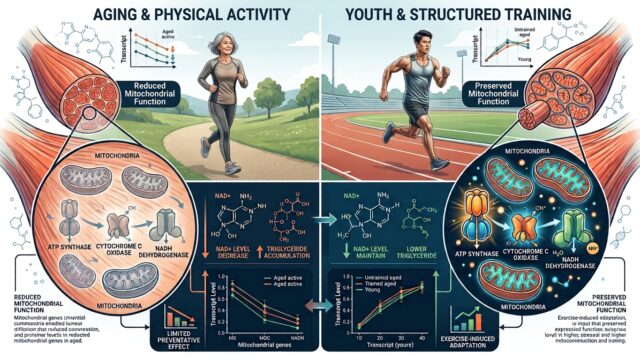
Can “Staying Active” Alone Prevent Muscle Aging?

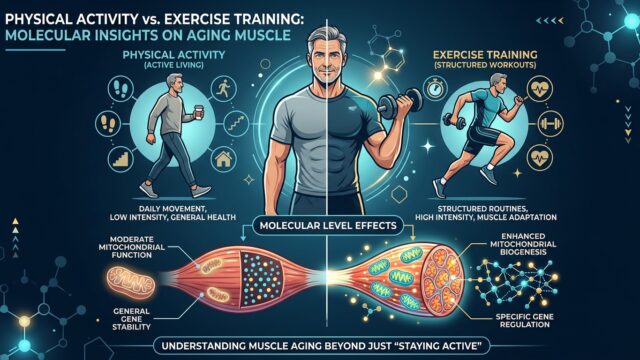
Examining Physical Activity vs. Exercise Training at the Molecular LevelIt is widely known that as we age, muscle mass d...

Masters & Aging
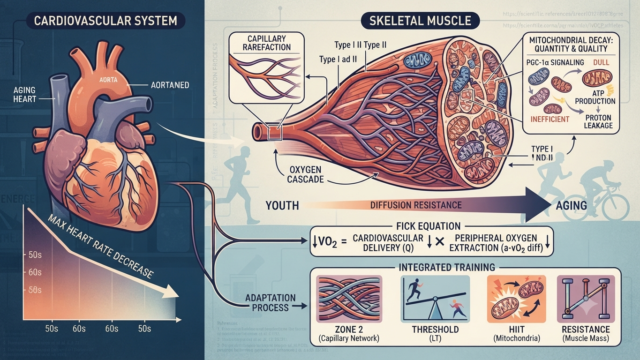
From 80% at Age 20 to 60% at 75? – The Age-Related Decline in Peripheral Oxygen Extraction

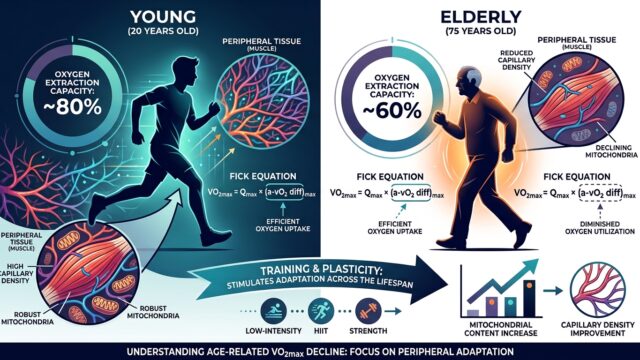
"I feel like my stamina isn't what it used to be." This is a reality that virtually every long-term endurance athlete ev...
Exercise Physiology

Why Your VO2max Drops Even When You Train Hard: After 50, It Is Not Just About the Heart—It Is Also About Muscles’ Ability to Use Oxygen

In my 50s, my maximum heart rate is lower than it used to be.Running at the same pace feels much harder.Even with high-v...
Body & Conditioning

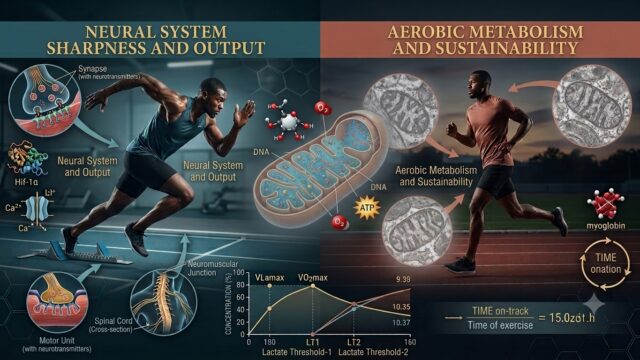
The Balance Between “Sharpening” and “Metabolism”: Understanding Pre-Race Tapering Through Exercise Physiology

📌 Key TakeawaysMetaphors vs. Biology: Many popular explanations of tapering—such as a "two-week mitochondrial lifespan" ...
Masters & Aging

Muscle Aging vs. Physical Inactivity: What Is the Molecular Difference Between “Moving” and “Training”?

Is muscle decline simply a consequence of getting older, or does reduced physical activity account for much of it?This q...
Metabolism & Cellular Science

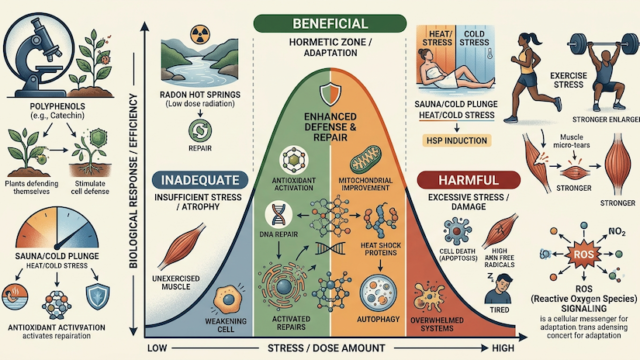
[The Difference Between Poison and Medicine Lies in the “Dose”] What Is Hormesis? How Small Amounts of Stress Make the Body Stronger

Would you be surprised if you were told that among the things we daily believe to be "good for our health," there are ac...